 Medically reviewed by Dr. Ludger Hanneken
Medical Director · Smart Dry Eyes
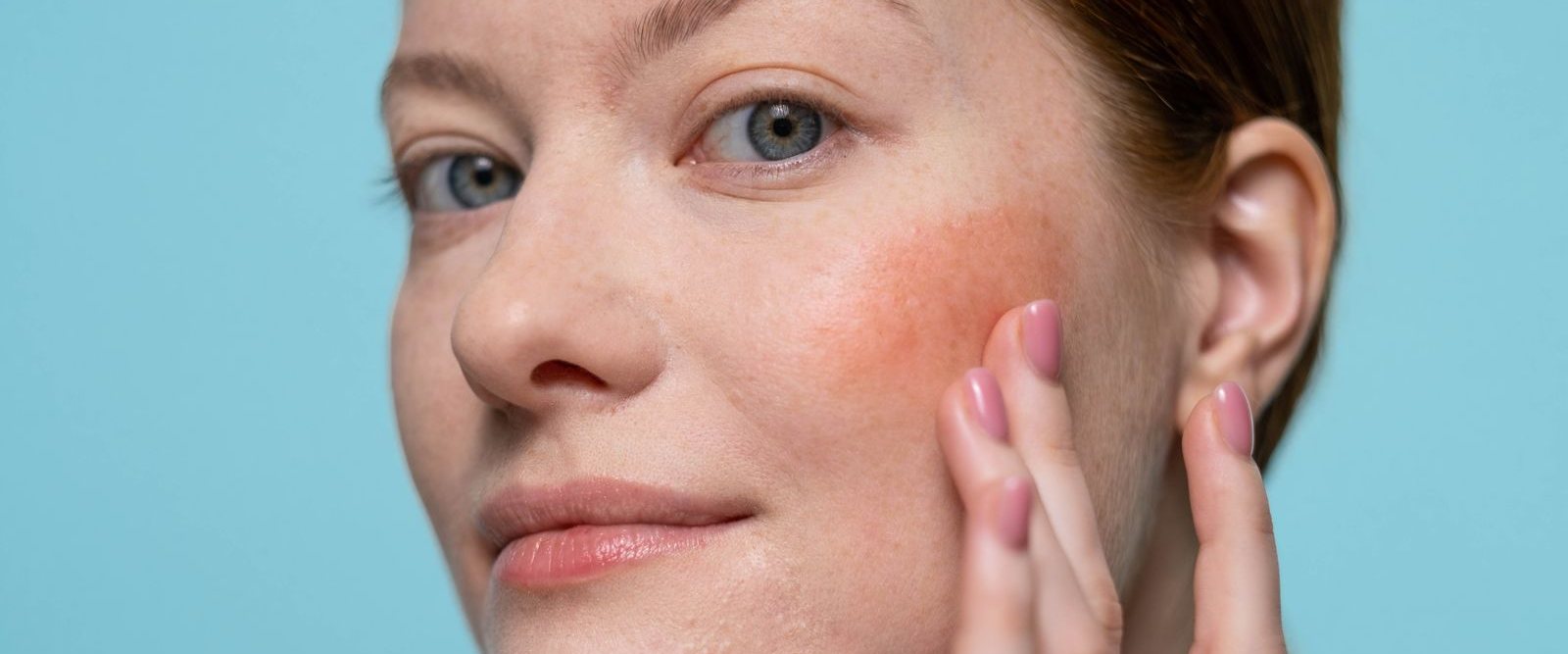
Rosacea mainly affects the skin of the face, but it can also involve the eyes and eyelids. Burning, redness and recurring eyelid margin inflammation often resemble other causes of dry eye. Here you can find out which signs point to ocular rosacea and how it is examined and treated.
Ocular rosacea is common and often overlooked
Figures vary from study to study. A 2025 review found eye involvement in around 44 percent of people with skin rosacea, and the German rosacea guideline speaks of about half. Ocular rosacea is diagnosed far less often, however.
Eye symptoms can appear before the skin changes. In addition, the severity of the eye symptoms cannot be reliably judged from how visible the rosacea is on the face.
Symptoms of rosacea in the eyes and eyelids
The symptoms resemble ordinary dry eye, but come with some typical companions. The main signs that point to ocular rosacea are:
- burning, grittiness or a foreign-body sensation, usually in both eyes
- red, thickened eyelid margins with fine dilated vessels along the lash line
- recurring styes or chalazia
- watery, light-sensitive eyes that do not settle despite drops
- redness, flushing or bumps on the cheeks, nose, chin or forehead
Children can develop ocular rosacea too. In children it often shows as recurring chalazia and chronically inflamed eyelid margins, and it is frequently recognised only after a long time. Repeated chalazia in a child are therefore a good reason to have the eyelid margins specifically examined.
How rosacea on the eyelids leads to dry eye
Ocular rosacea is associated with inflammatory reactions and changes in the blood vessels of the eyelids. Small dilated vessels at the lid margin are often noticeable. The exact biological processes are complex and not the same in everyone affected.
The Meibomian glands are often affected too. Their oily secretion protects the tear film from evaporating too quickly. If gland function is disturbed, the secretion can drain less well and the tear film can become unstable. A long-standing dysfunction can be accompanied by a loss of gland tissue. This is why tear substitutes alone are not enough to relieve all symptoms.
The role of hair follicle mites (Demodex) has not yet been fully clarified. People with rosacea carry considerably more of these mites than people with healthy skin. Whether they trigger the inflammation or mainly benefit from it remains open.
Triggers that worsen rosacea symptoms in the eyes
Many people know their triggers from their skin. The same factors can also make the eyes worse: heat and sharp changes in temperature, sun, alcohol, spicy food, hot drinks, stress and physical exertion. A short symptom diary helps you identify your own triggers. Cosmetics at the lid margin can also irritate the eyelids further; more on this in our article on eye makeup and dry eye.
Treatment of ocular rosacea
Because ocular rosacea is chronic and runs in flare-ups, treatment works on several fronts at the same time:
- Regular eyelid care and, if tolerated, warm compresses can help when there is an accompanying Meibomian gland dysfunction. Which measures are suitable depends on the findings.
- Preservative-free tear substitutes relieve the dryness but do not remove the cause.
- Prescription therapy: If the inflammation is more severe, your eye doctor may prescribe anti-inflammatory eye drops or antibiotics. Here, antibiotics are used mainly for their anti-inflammatory effect, as drops, ointment or low-dose tablets.
- In-clinic treatments: When the findings are suitable, Tixel, IPL and Meibomian gland expression may be considered. The effect, the benefit and possible risks should be discussed individually.
- Skin treatment: Rosacea on the face belongs in the hands of a dermatologist, coordinated with the eye treatment.
Individual studies report improvements in ocular rosacea with Tixel and IPL in addition to gland expression. The evidence is still limited, however; the possible benefit depends on the findings and on the treatment used.
Warning signs: when to see an eye doctor promptly
More severe pain, marked sensitivity to light or declining vision should be checked by an eye doctor promptly. They can point to involvement of the cornea or another cause that needs treatment.
How Smart Dry Eyes helps with ocular rosacea
In our centres we examine the eyelid margins, the Meibomian glands and the stability of the tear film, and we look specifically for the signs of rosacea. You can read how such an examination works in our article on the dry eye assessment. If rosacea can be diagnosed as the cause of your dry eye, we put together a plan that treats the inflammation and the glands, not just the dryness. On request, we coordinate with your dermatologist.
Frequently asked questions about ocular rosacea
Is rosacea in the eyes dangerous for your sight?
Usually the symptoms stay limited to the eyelids and the tear film. Rarely, the cornea is involved. Marked pain, severe sensitivity to light or worse vision are then the typical warning signs and should be checked by an eye doctor promptly.
Which eye drops help with rosacea in the eyes?
Preservative-free tear substitutes relieve the dryness but do not solve the problem in the Meibomian glands. If the inflammation is more severe, the eye doctor prescribes anti-inflammatory or antibiotic drops. Vasoconstrictor drops “for red eyes” are not suitable for long-term use.
Can ocular rosacea be cured?
Ocular rosacea often takes a chronic course. Suitable treatment and regular eyelid care can relieve symptoms and limit relapses.
Find the cause of your dry eyes
A questionnaire can give you first clues. A diagnosis and a treatment plan require an examination.
You can find information on examination locations and available services on our locations page.
Note: This article is for general information and does not replace a medical diagnosis or treatment. If your symptoms persist or are severe, consult an eye doctor.