Smart Dry Eyes Eye Clinics

Treat the cause of dry eye, not just symptoms.

Based on your exam results, Smart Dry Eyes ophthalmologists identify exactly what is driving your dry eyes and can deliver targeted medical treatments designed to address it at the source.

What Is a Smart Dry Eyes Eye Clinic?

Smart Dry Eyes Eye Clinics are led by partner ophthalmologists with specially trained diagnostic and treatment teams. These clinics go beyond standard dry eye care — they specialize in identifying and treating the different types and causes of dry eye using advanced devices, structured clinical workflows, and evidence-based therapies.

When symptoms persist despite basic care or when device-based medical treatment is needed, an Eye Clinic offers a higher level of diagnostic accuracy and treatment capability. Whether you’re referred by an optical center or visiting directly, the technology and protocols are consistent.

What a Smart Dry Eyes Eye Clinic Offers:

  • Precise classification of your dry eye type — evaporative, aqueous-deficient, inflammatory, or a combination
  • Personalized treatment matched to your diagnosis, severity, and lifestyle
  • In-clinic device-based therapies that cannot be replicated at home or at an Optical Center
  • Structured follow-up with objectively measured outcomes

When Is It Time to See a Specialist?

You can be referred by an optical center or visit directly. Specialist care is particularly important when:

  • Symptoms persist despite drops or basic care — burning, dryness, or discomfort keeps returning after weeks or months of artificial tears
  • Screening indicates moderate or severe dry eye — the condition has progressed beyond what basic care can address
  • Meibomian gland dysfunction is suspected — the oil-producing glands in your eyelids may be blocked, shortened, or damaged
  • Surface inflammation is present — chronic, low-grade inflammation is one of the most common and most under-diagnosed drivers of dry eye
  • Device-based or prescription therapy is needed — thermal gland therapy, Tixel, light-based therapy, or prescription anti-inflammatory medication

The purpose is to move beyond symptom relief and toward a diagnosis-driven treatment plan that targets the actual cause.

What to Expect During Your Visit?

Whether you arrive by referral or directly, your visit follows a structured medical evaluation. If diagnostic data from an optical center already exists in your patient portal, the ophthalmologist builds on it. Otherwise, the full diagnostic process begins here.

Step 1: Comprehensive Diagnostics

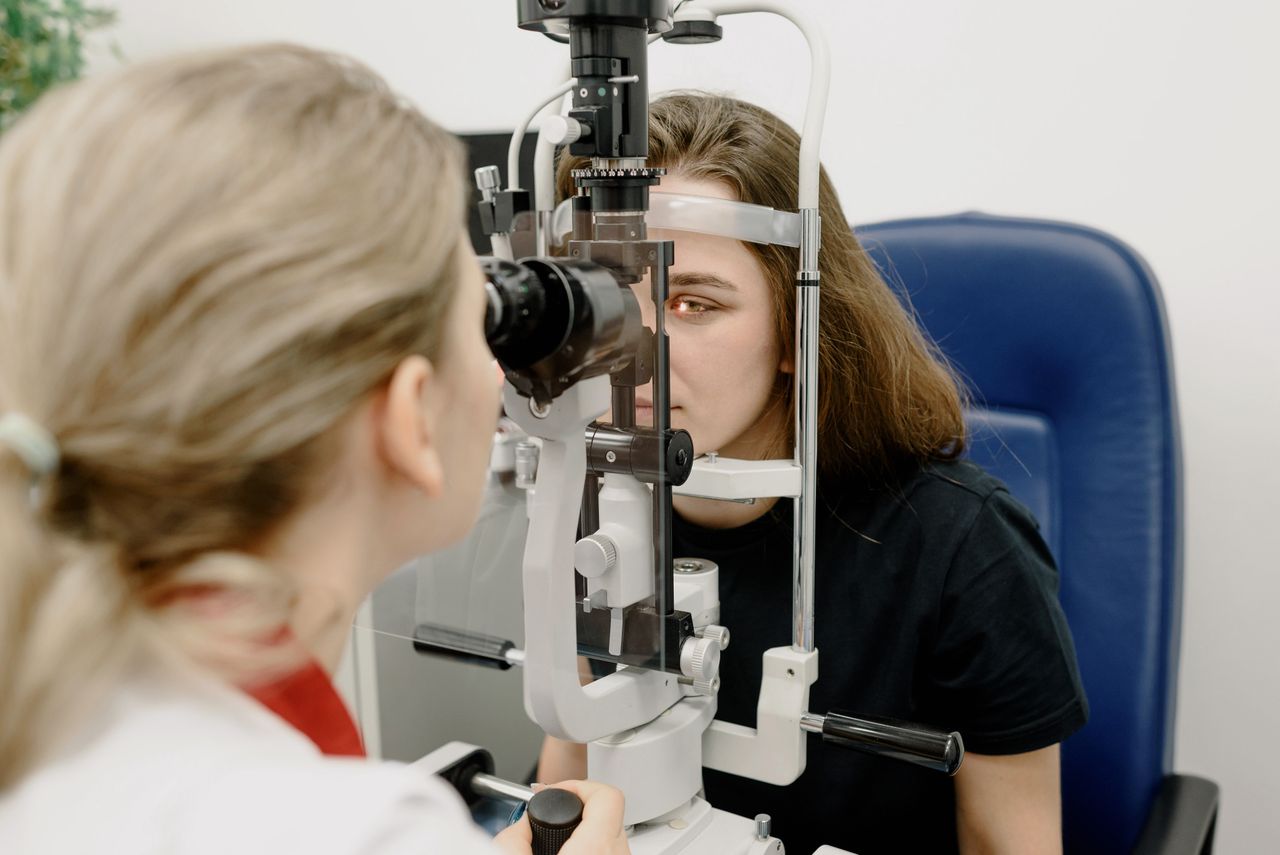
The ophthalmologist begins by running a series of advanced diagnostic tests:

  • Tear film analysis: device-based exams testing the stability, volume, and composition of your tear film
  • Lid margin analysis – assessment of eyelashes, opening of meibomian glands, eyelid characteristics
  • Meibography: a specialized infrared scan that photographs the oil-producing glands inside your eyelids, revealing whether the glands are healthy, partially blocked, shortened, or permanently lost
  • Ocular surface assessment: examination under magnification, sometimes using a dye that highlights damage invisible to the naked eye
  • Inflammation assessment — specific tests to evaluate whether chronic inflammation is present

Step 2: Evaluation and Treatment Plan

Once the diagnostic data is collected, the ophthalmologist evaluates the full picture:

  • Classification: identifying if your dry eye is evaporative, aqueous-deficient, mixed, or inflammation-driven, and assessing its severity.
  • Personalized treatment plan: a targeted approach that addresses the root cause, including in-clinic therapies, prescriptions, and home routines.
  • Follow-up schedule: when to return, what to expect, and how treatment will be adjusted based on measurable results

Every decision is based on objective data. The goal is to treat what’s causing your dry eye — not only manage what you feel today.

What Treatments Are Available?

Based on your diagnosis, your ophthalmologist recommends a personalized combination of therapies matched to your tear film profile, gland function, inflammation level, and daily needs.

Device-Based Therapy

Professional treatments conducted at the clinic, usually lasting 10–30 minutes. Based on your treatment plan, a combination of the following may be applied:

  • Lid margin cleaning: Manual or device-assisted cleaning of the lid margins and eyelashes.
  • Thermal gland therapy: controlled heat softens and releases hardened oils trapped in blocked meibomian glands
  • Gland expression: manual opening and expression of blocked glands, often combined with thermal therapy
  • Tixel: a 2-minute thermo-mechanical treatment that delivers targeted heat pulses to the eyelids, improving oil gland function and tear stability with no downtime. Typically, 3–4 sessions are necessary
  • IPL (Intense Pulsed Light): A 10–15 minute procedure using light pulses to decrease inflammation, melt hardened gland oils, and improve tear quality; usually 3–4 sessions are necessary

Pharmacological Treatment

For more severe inflammation, infection, or advanced tear deficiency:

  • Anti-inflammatory drops: prescription-strength formulations targeting surface inflammation
  • Immunomodulatory therapy: specialized drops that regulate the immune response and interrupt the inflammation cycle
  • Oral medications: antibiotics or anti-inflammatories — are used to target systemic factors that contribute to gland dysfunction.

Home Care

Your clinic will recommend and explain:

  • Eyelid hygiene techniques — warm compresses, lid massage, lid cleaning
  • Environmental adjustments — humidity, screen breaks, airflow
  • Nutritional support for tear production
  • A structured schedule for prescribed drops or supplements

How Is Your Progress Monitored?

Dry eye treatment is an ongoing process, not a one-time fix. After your initial treatment, structured follow-up visits monitor your tear film, gland function, and symptoms using consistent objective measurements.

Follow-up can take place at your eye clinic, a nearby optical center, or both. Your records are shared across the network.

  • Objective monitoring at each visit
  • Treatment adjustments based on actual results
  • Clear long-term plan for stability
  • Flexible location for follow-up

Your Care Is Connected — From Screening to Ophthalmologist to Follow-Up

Smart Dry Eyes Eye Clinics operate within a coordinated network that encompasses optical centers, specialist ophthalmologists, and dedicated care centers for complex cases.

All records, test results, and treatment histories are shared seamlessly among providers, eliminating the need for repeated tests, preventing lost information, and avoiding the need to start over.

Take a Step — Consult a Smart Dry Eyes Ophthalmologist

Locate a Smart Dry Eyes Eye Clinic in your area and begin your journey to effective, long-term treatment.

Scroll to Top
This site is registered on wpml.org as a development site. Switch to a production site key to remove this banner.