
What Is Dry Eye Syndrome? Symptoms, Causes & Diagnosis
Dry Eye Disease (DED) is a multifactorial disease of the ocular surface.
It is a complex eye condition, far more than just a simple lack of tears. It is a self-perpetuating cycle of damage driven by many different factors including:
Unstable Tears & Eyelid Health: Problems with your eyelids, such as issues with the oil-producing meibomian glands or other eyelid diseases, can disrupt your tear film, causing tears to evaporate too quickly and become unbalanced.
Irritating Tears: Tears become too concentrated, leading to irritation and damage on the eye’s surface.
Chronic Inflammation: This irritation triggers ongoing inflammation, forming a cycle that worsens the condition.
Sensitive Ocular Surface Nerves: Damage to these eye nerves can cause persistent pain, even when physical signs of dry eye are mild.
How the Tear Film Works
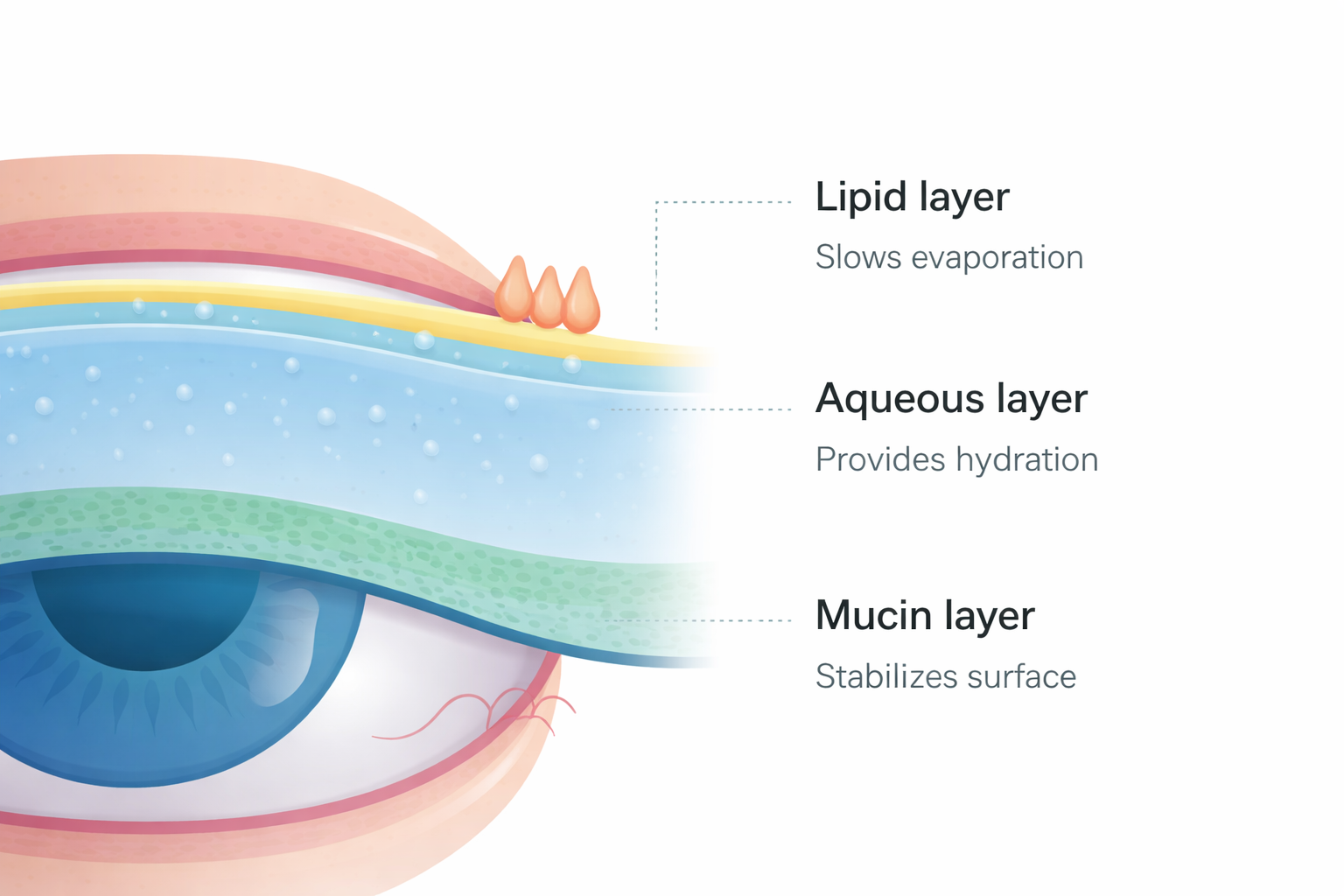
Your eyes are protected by the tear film — a thin but highly structured layer that supports comfort, clarity, and protection.
- Lipid layer – slows evaporation
- Aqueous layer – provides hydration
- Mucin layer – stabilizes the surface
When one or more layers become unstable, irritation and inflammation may develop.
Common Symptoms
Dry Eye can affect comfort and vision.
Burning or stinging
Persistent irritation or a gritty sensation.
Redness
Visible inflammation, often later in the day.
Fluctuating vision
Blur that may improve with blinking.
Light sensitivity
Increased glare or discomfort outdoors.
Eye fatigue
Worsens after reading or screen time.
Excess tearing
Reflex tearing can occur even in Dry Eye.
Symptoms often worsen with prolonged screen use, air conditioning, heating, wind, or low humidity.
More than 1 in 5 adults experience symptoms consistent with Dry Eye Disease.
More than 1 in 5 adults experience symptoms consistent with dry eye disease. Prevalence is rising, driven by screen-heavy lifestyles, aging populations, environmental conditions, and hormonal factors.
Why Dry Eye Happens
Dry eye disease is multifactorial — several mechanisms may be involved at once, among them:
- Meibomian gland dysfunction
- Inflammation
- Hormonal changes
- Contact lens wear
- Prolonged screen exposure
- Aging and environmental factors
Start with a structured assessment to understand what is actually happening on your ocular surface.