Treatment
Tixel for Dry Eyes
Targeted heat treatment of the meibomian glands
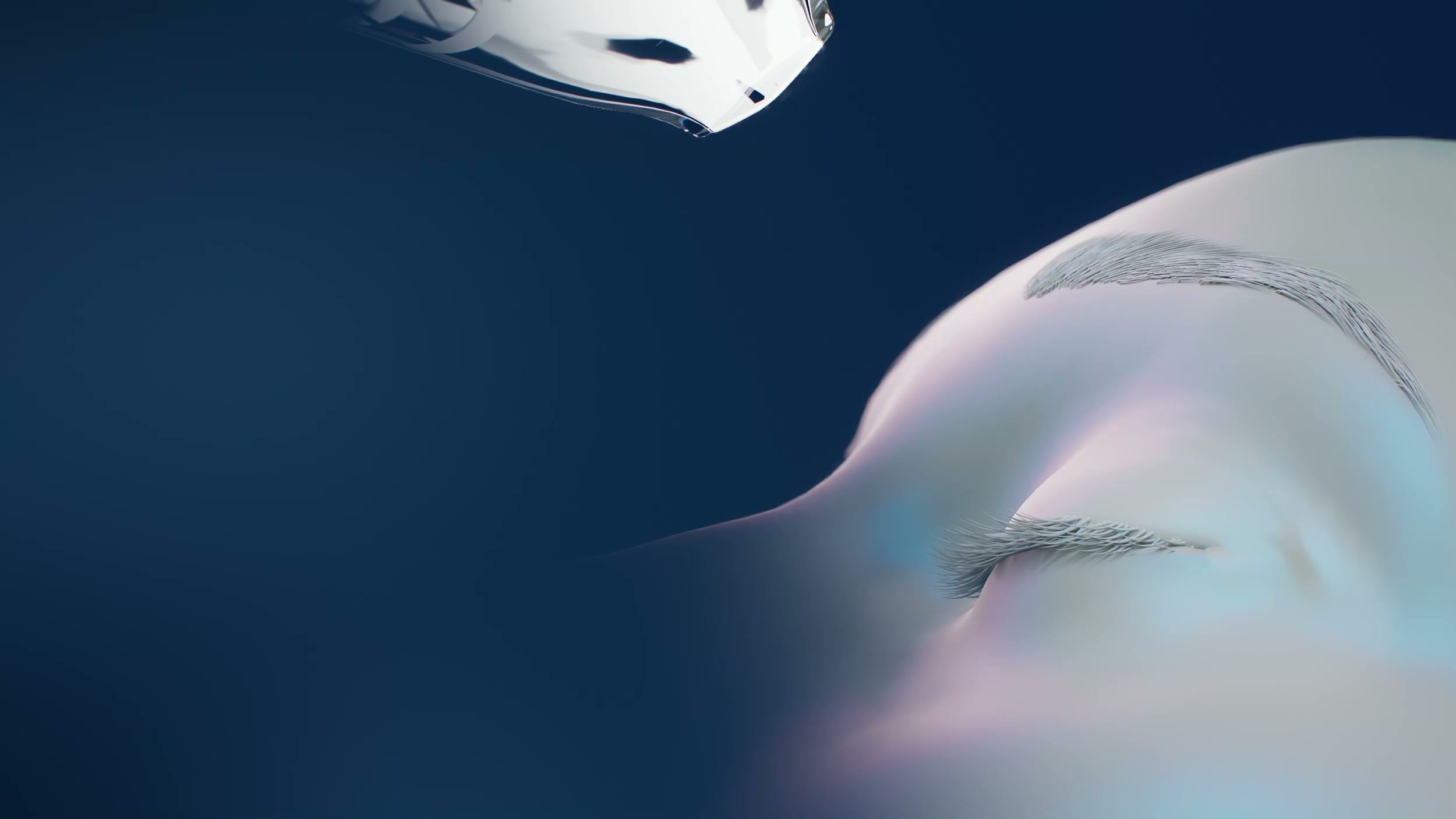
Tixel briefly transfers precisely controlled heat through the eyelid skin into the tissue beneath it. The procedure works without laser, light pulses or radiofrequency and therefore does not depend on the light-dependent mechanisms of action of an IPL treatment.
Video: Novoxel Ltd.
- Treatment time
- About 2 minutes
- Treatment course
- Usually 3 sessions
- Interval between sessions
- About 2 weeks
- Downtime
- Usually none
What Tixel treats in dry eye disease
The meibomian glands are located in the upper and lower eyelids. They produce an oily secretion known as meibum. It forms the outer lipid layer of the tear film and slows the evaporation of the tear fluid.
In meibomian gland dysfunction, the composition of this secretion often changes. It becomes more viscous, leaves the glands less easily and builds up in the excretory ducts. As a result, the tear film lacks part of its protective lipid layer. The tears evaporate more quickly, and symptoms such as burning, a foreign-body sensation, redness or fluctuating vision can develop.
Tixel targets the impaired gland function. Controlled heat pulses are intended to warm the thickened meibum, improve its ability to flow and thereby make it easier for the glands to empty. The treatment is considered in particular for evaporative dry eye with confirmed meibomian gland dysfunction.
How Tixel works
- 01Titanium tip at a precisely controlled temperature
- 02Very brief contacts with the eyelid skin
- 03Heat conduction instead of light
- 04The heat spreads towards the tarsus
- 05The viscosity of the thickened meibum can decrease
Tixel uses a thermo-mechanical technology. A titanium tip held at a precisely controlled temperature transfers heat directly to the eyelid skin through very brief contacts. In contrast to IPL, the energy is transferred not by light but by heat conduction.
The heat spreads through the eyelid skin towards the tarsus, in which the meibomian glands lie. Warming can reduce the viscosity of the thickened meibum. The mobilised secretion can be emptied more easily; where indicated, the treatment is complemented by a controlled expression.
Healthy meibum flows sufficiently well at the physiological temperature of the eyelid. In meibomian gland dysfunction, the lipid composition and melting behaviour can change. The natural temperature of the eyelid may then no longer be enough to allow normal release of the secretion.
What matters for the treatment is not the temperature of the titanium tip alone, but the defined combination of contact time, contact area and transferred energy. During the procedure, a suitable eyelid shield protects the ocular surface. Because Tixel works without optical energy, the heat transfer does not depend on light absorption by melanin. Individual suitability is nevertheless assessed before every treatment.
Tixel is the one treatment in the Smart Dry Eyes programme that is tied to a single technology. Everything else on this site is described independently of any manufacturer.
What a Tixel treatment involves
Before
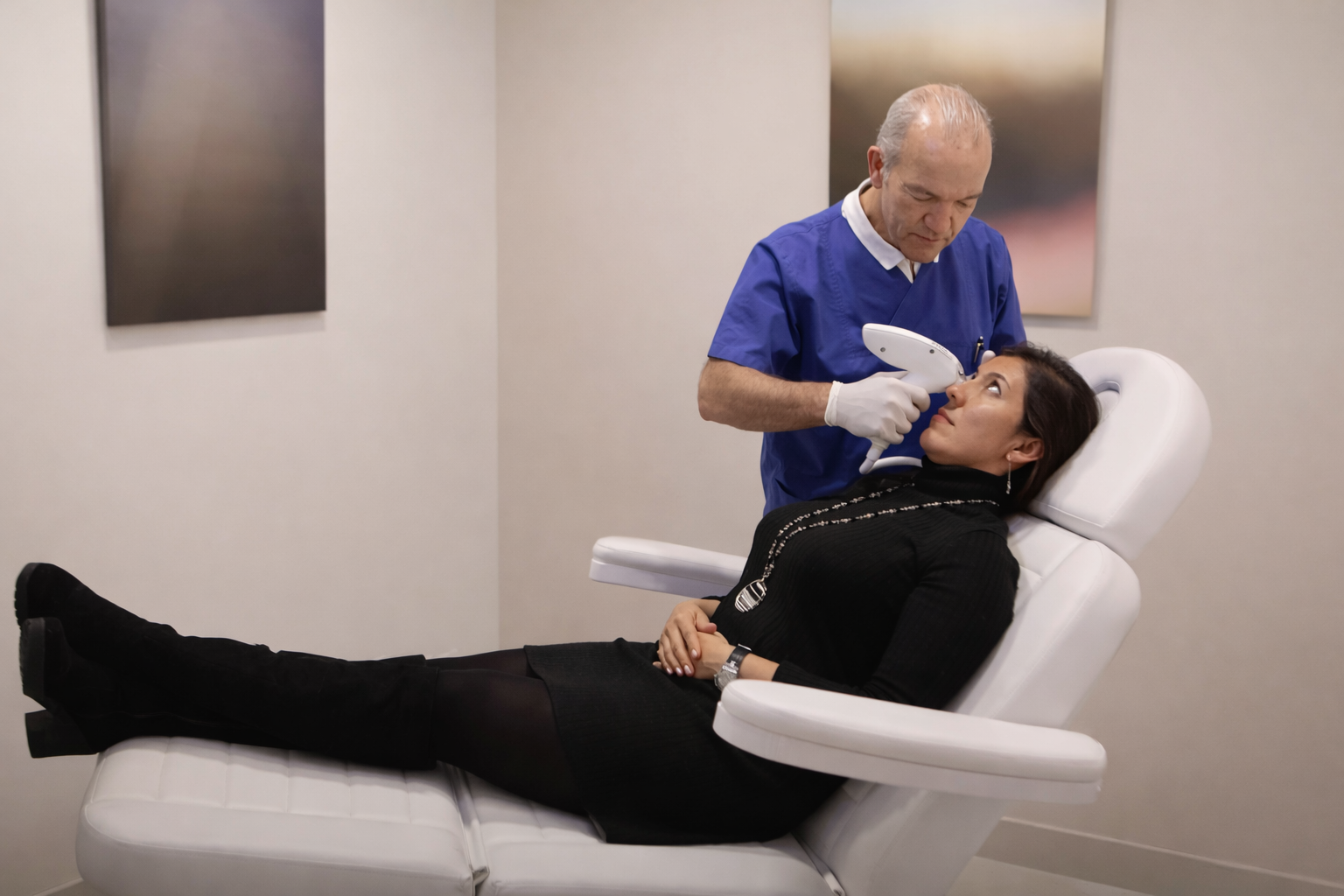
Before the treatment, the ocular surface, the lid margins and the meibomian glands are examined. The findings show whether obstructive meibomian gland dysfunction is present and whether a heat treatment is appropriate. A suitable protective shield is then put in place.
During
The titanium tip is placed briefly on the skin of the upper and lower eyelids following a defined pattern. The pulses are felt as a brief, intense heat. The protocol itself takes about two minutes.
After
Where indicated, a meibomian gland expression can follow. After the treatment, the eyelid skin is checked. Temporary redness, a sensation of warmth or slight swelling is possible and usually subsides within a short time.
The course
At Smart Dry Eyes, the usual protocol comprises three sessions at intervals of about two weeks. The number and spacing of sessions, as well as any complementary measures, depend on the individual findings.
Who Tixel is suitable for
Possible indications
- Evaporative dry eye with confirmed meibomian gland dysfunction
- Thickened meibum, or meibum that is difficult to express
- Obstructive changes of the meibomian glands
Contraindications and limits
- Contraindications and individual risk factors are checked before every treatment.
- Particular attention is required in the case of acute infections or inflammation in the treatment area, recent eye surgery, relevant skin diseases, impaired wound healing and certain medications.
- In predominantly aqueous-deficient dry eye without relevant meibomian gland dysfunction, Tixel is not the primary treatment.
- Advanced loss of the meibomian glands likewise limits what a heat treatment can achieve.
Costs
Europe
Tixel, full course of three sessionsfull course
from €800
Follow-up visit
from €150
The actual costs depend on the treating centre, the extent of treatment required and any combination therapies. In Germany, this is generally a private medical service. Reimbursement by private health insurers or the Beihilfe scheme depends on the respective tariff and the individual case.
Frequently asked questions
Is the treatment painful?
The brief heat pulses can be felt as intense or stinging. Most patients tolerate the treatment well. If needed, a topical anaesthetic ointment can be used.
Is Tixel also possible on dark or tanned skin?
Tixel works without light. The uptake of energy therefore does not depend on skin pigmentation in the same way as with IPL. An individual assessment nevertheless remains necessary.
Can Tixel be carried out in summer?
Because the treatment is not based on the absorption of light by skin pigments, the same light-dependent restrictions as with IPL do not apply. The treated skin should nevertheless be cared for as medically advised and protected from excessive sun.
What distinguishes Tixel from IPL?
Tixel transfers controlled heat and primarily addresses the flow of the secretion and gland function. IPL uses intense light pulses and is considered in particular for inflammatory meibomian gland dysfunction and ocular rosacea with visible vascular changes.
When can an improvement be expected?
The effect develops individually and can increase over the course of several sessions. A specific treatment outcome cannot be guaranteed for the individual patient.
Which treatment do your eyes need?
Not all dry eye is the same. Biofilm, inflamed lid margins, thickened meibum, ocular rosacea and reduced tear production call for different therapeutic approaches. Smart Dry Eyes records the relevant findings systematically. The medical assessment decides which treatment or combination is appropriate for you.
Other dry eye treatments
Medically reviewed by Dr. Ludger Hanneken, MD, PhD · Medical Director, Smart Dry Eyes