Treatment
Meibomian Gland Expression
Controlled emptying of blocked meibomian glands
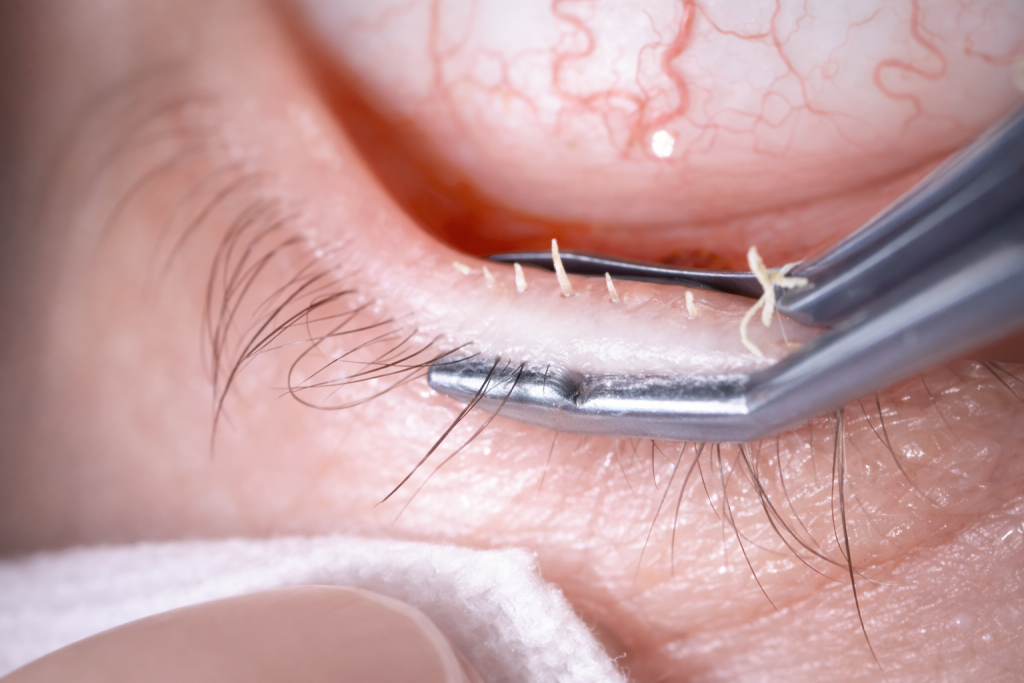
After controlled warming, targeted pressure is applied to the eyelids. This allows thickened secretion to be released from the meibomian glands and emptied through their excretory ducts at the lid margin. Heat improves the ability of the meibum to flow; expression then supports its release.
- Treatment time
- About 5 minutes
- Treatment course
- Depends on the individual findings
- Preparation
- Controlled warming of the eyelids
- Downtime
- Usually none
What meibomian gland expression treats
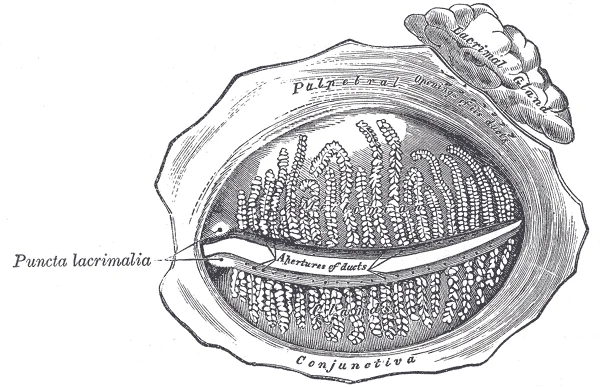
The meibomian glands produce the oily meibum. In meibomian gland dysfunction, this secretion can become more viscous. At the same time, the gland openings can narrow or close, so that the meibum no longer reaches the lid margin unhindered.
Under gentle pressure, a healthy gland releases clear, thin secretion. Where gland function is impaired, by contrast, the meibum is often cloudy, thickened or paste-like; in advanced cases, no secretion can be released at all.
Expression supports the controlled emptying of these glands. As a rule it is carried out after sufficient warming, so that the thickened secretion can be mobilised more easily.
Why a blocked gland often does not empty itself
- 01Free-flowing secretion and an open excretory duct
- 02The meibum becomes more viscous
- 03Keratinisation and deposits narrow the gland openings
- 04The secretion builds up
- 05The gland can lose function
For meibum to leave the glands, the secretion must flow sufficiently well and the excretory duct at the lid margin must be open. Every blink creates a slight natural pressure that is normally enough to release the fluid secretion.
In meibomian gland dysfunction, the composition of the meibum can change. It becomes more viscous and is transported less easily at normal eyelid temperature. At the same time, keratinisation and deposits can narrow the gland openings.
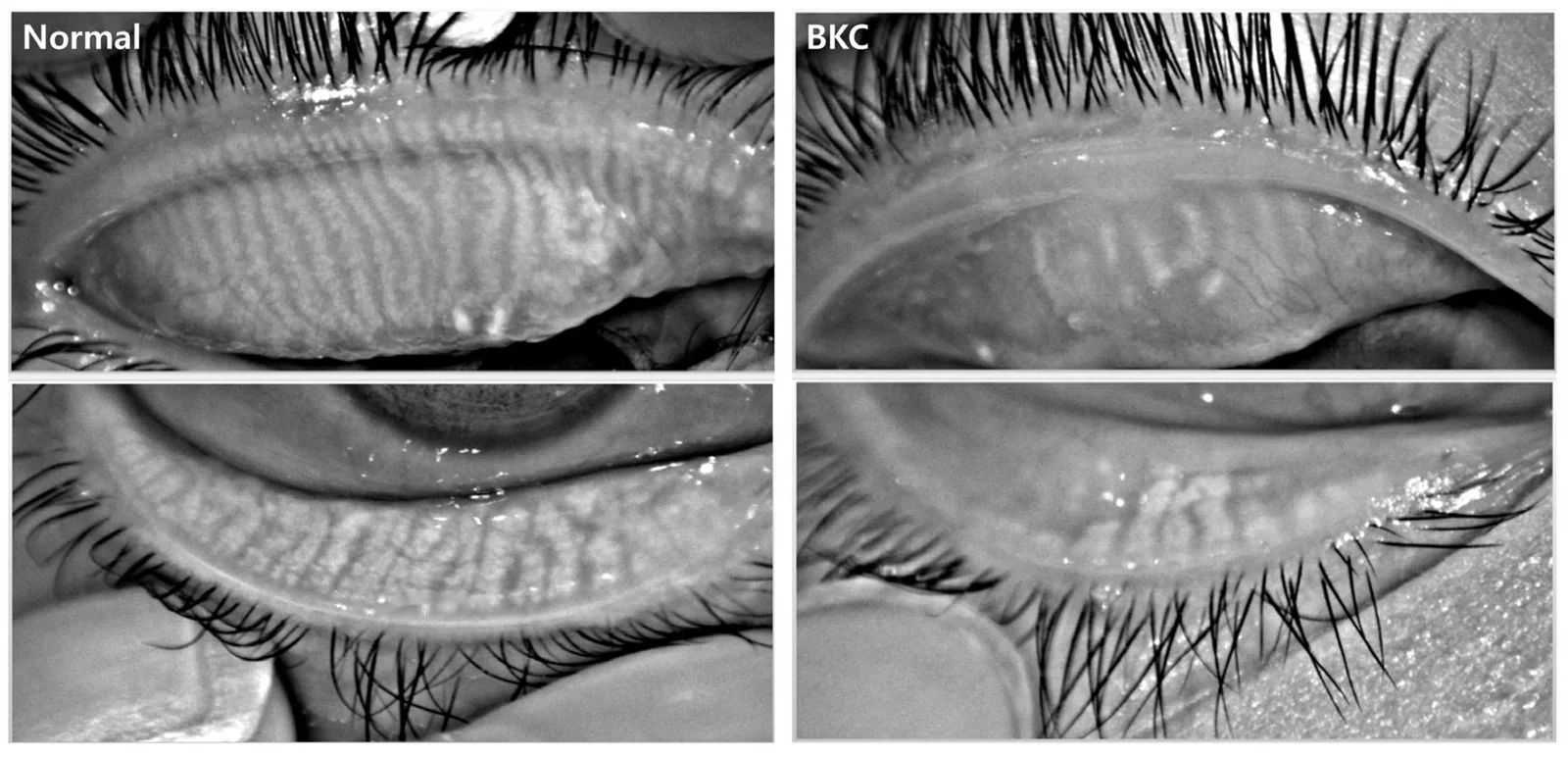
If a gland remains closed for a longer period, the secretion builds up. The gland can change structurally and progressively lose function. In meibography, such changes appear as shortened, thinned or missing gland structures.
Warming and expression fulfil different tasks: heat improves the ability to flow, controlled pressure supports emptying. Without sufficient warming, expression can be more uncomfortable and less effective.
What a meibomian gland expression involves
Before
First, the ocular surface, the lid margins and the meibomian glands are examined. The eyelids are then warmed in a controlled way. If needed, topical anaesthetic eye drops are used.
During
The eyelid is treated section by section with controlled pressure. Special instruments stabilise the eyelid from the inside and the outside. Pressure and position are dosed so that the warmed secretion can leave through the natural gland openings. At the same time, the quantity, colour and consistency of the meibum are assessed.
After
After the expression, the lid margins are cleaned and the ocular surface is checked. The eyelids may temporarily be slightly reddened or tender to pressure. As a rule, no downtime is required.
The course
How often an expression is appropriate depends on the extent of the meibomian gland dysfunction, the quality of the secretion and the response to treatment. It can follow Tixel, IPL or another suitable heat treatment.
Who expression is suitable for
Possible indications
- Thickened, cloudy or paste-like meibum
- Glands that are difficult to express or closed
- Evaporative dry eye with confirmed MGD
- Build-up of secretion where gland structure is still present
Contraindications and limits
- In the case of acute infections or pronounced inflammation, an acute stye or a chalazion requiring treatment, herpes in the treatment area, recent surgery or an increased tendency to bleed, the treatment must be postponed or weighed up with particular care.
- In predominantly aqueous-deficient dry eye without relevant MGD, expression is not the primary treatment.
- In advanced gland loss without expressible secretion, what it can achieve is limited.
Costs
Europe
Manual expression of the meibomian glands
from €100
Follow-up visit
from €150
The actual costs depend on the centre, the extent of treatment required and any combination therapies. In Germany, this is generally a private medical service. Any reimbursement depends on the individual insurance contract.
Frequently asked questions
Is the treatment painful?
Expression is usually felt as a brief, intense sensation of pressure. How comfortable it is depends, among other things, on the severity of the obstruction, the preceding warming and individual sensitivity.
Can I express my meibomian glands myself?
Firm pressure with the fingers or with unsuitable aids is not advisable. Professional expression is carried out under direct view, with controlled pressure and instruments designed for the purpose.
Can shortened glands grow back?
Shortened glands do not automatically mean that treatment is no longer possible. What matters is how much functional tissue is present. According to current knowledge, however, gland tissue that has already been completely lost cannot be reliably restored.
Why is heat alone not always enough?
Heat can liquefy thickened meibum. If the excretory duct is markedly narrowed or closed, the secretion may still not leave the gland sufficiently. The subsequent expression then supports mechanical emptying.
How often should expression be repeated?
There is no fixed rhythm that suits all patients. The frequency depends on the condition of the glands, the quality of the secretion, the symptoms and the result of the previous treatment.
Which treatment do your eyes need?
Not all dry eye is the same. Biofilm, inflamed lid margins, thickened meibum, ocular rosacea and reduced tear production call for different therapeutic approaches. Smart Dry Eyes records the relevant findings systematically. The medical assessment decides which treatment or combination is appropriate for you.
Other dry eye treatments
Medically reviewed by Dr. Ludger Hanneken, MD, PhD · Medical Director, Smart Dry Eyes