
Treatment
Punctal Plugs for Dry Eyes
Temporary closure of the tear drainage in aqueous tear deficiency
Punctal plugs are very small plugs made of silicone or of a dissolvable material. They are placed in the puncta, the tiny openings at the inner end of the lid margin, and reduce the outflow of tear fluid. As a result, the eye’s own tears stay on the ocular surface for longer. Insertion takes only a few minutes and requires no injection. Silicone plugs can usually be removed again; dissolvable plugs break down by themselves.
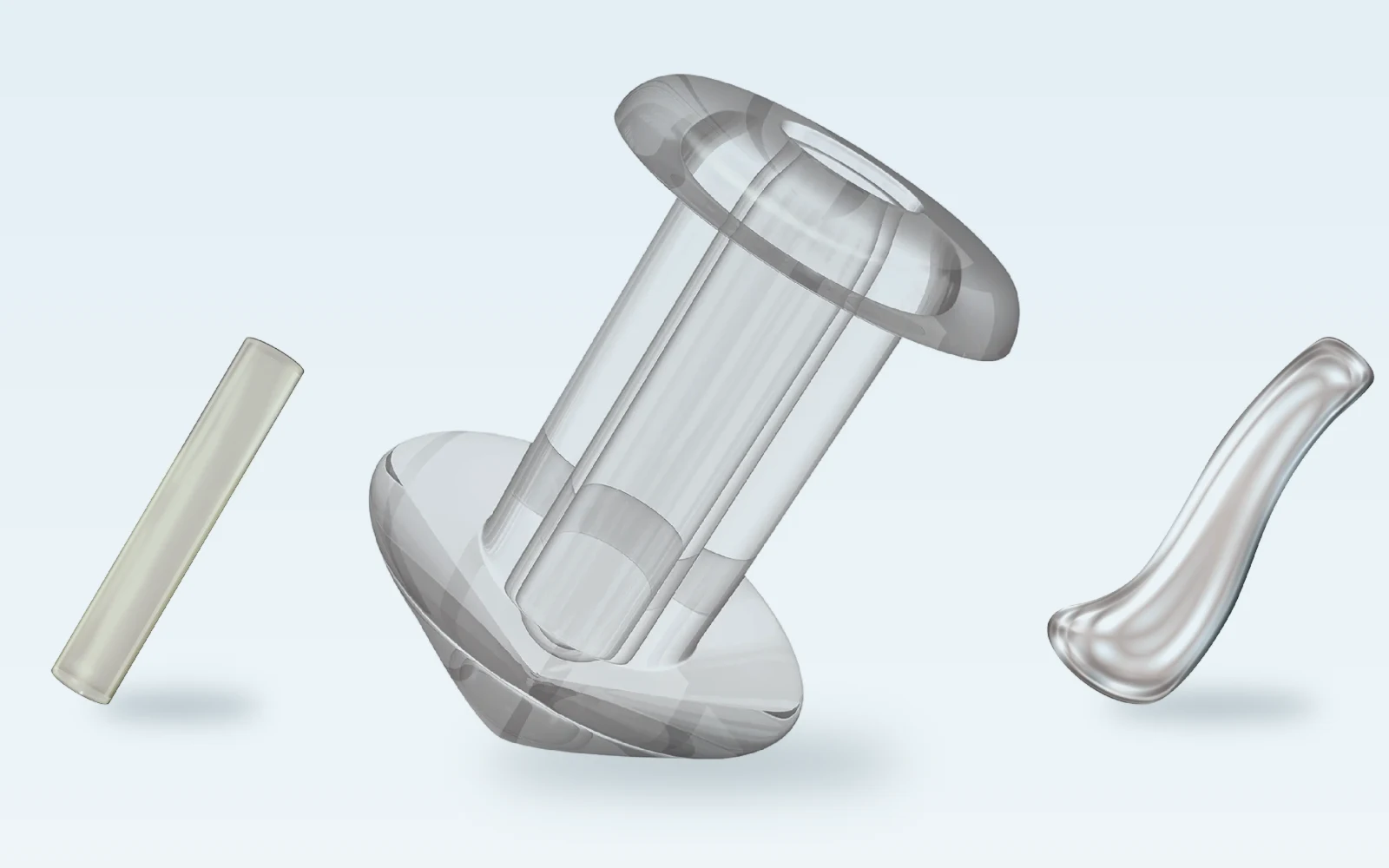
Image: OASIS Medical, Inc. · oasismedical.com
- Treatment time
- A few minutes
- Duration in place
- From a few days to several years, depending on the plug type
- Sensation
- Brief feeling of pressure; anaesthetic drops if needed
- Downtime
- Usually none
When punctal plugs are used
Punctal plugs are considered above all for dry eye with aqueous tear deficiency. In this condition the lacrimal gland produces too little tear fluid, for example in Sjögren’s syndrome or another autoimmune disease, with increasing age, or as a result of certain medicines. The ocular surface is then not wetted sufficiently. Possible symptoms are burning, a foreign-body sensation, redness, light sensitivity and fluctuating vision.
Signs of aqueous tear deficiency include a low Schirmer value, a low tear meniscus and staining of the cornea or conjunctiva. With such findings it can make sense to keep the available tear fluid on the ocular surface for longer.
Punctal plugs do not increase tear production. They treat neither inflammation nor meibomian gland dysfunction. They can therefore complement treatment of the underlying cause, but do not replace it.
How punctal plugs work
Tear fluid is produced continuously, spread over the ocular surface with every blink and drained at the inner corner of the eye. There, at the edge of the upper and lower lid, lies a fine opening, the punctum. From here the tears pass through the canaliculi into the lacrimal sac and on into the nose.
A punctal plug closes the punctum. Less tear fluid drains away, it stays on the ocular surface for longer and the tear meniscus can rise. Tear substitutes and medicated eye drops may also remain on the eye for longer. The dosage of medicated eye drops may therefore need to be adjusted. In dry eye, preservative-free preparations are generally preferable.
There are different types of plug. Dissolvable plugs made of collagen or synthetic materials break down within days to months, depending on the product. They are suitable for testing the effect of occlusion first. Silicone plugs sit visibly in the punctum with a small collar, can stay in place for longer and can usually be removed easily if needed. Intracanalicular plugs lie deeper in the canaliculus and are not visible from outside. They are, however, harder to check and to remove.
Important note. Tears also carry inflammatory mediators away from the ocular surface. If the tear drainage is closed during active inflammation, these substances can remain on the eye for longer. Lid margin inflammation, meibomian gland dysfunction or inflammation of the ocular surface should therefore generally be treated, or brought under sufficient control, first.
The plug types
Smart Dry Eyes is not tied to any manufacturer. The systems below are the ones most often used for this treatment in our partner centres and in European practice generally. Which one a centre runs does not change the treatment you receive.
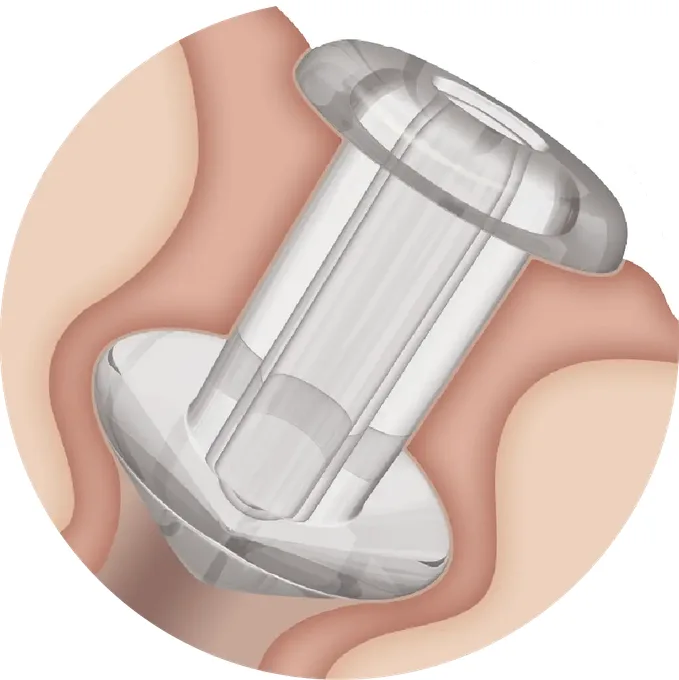
Silicone plug
FCI · France
Silicone plugs sit visibly in the punctum with a small collar, can stay in place for longer and can usually be removed easily if needed.
Image: FCI S.A.S. · fciworldwide.com
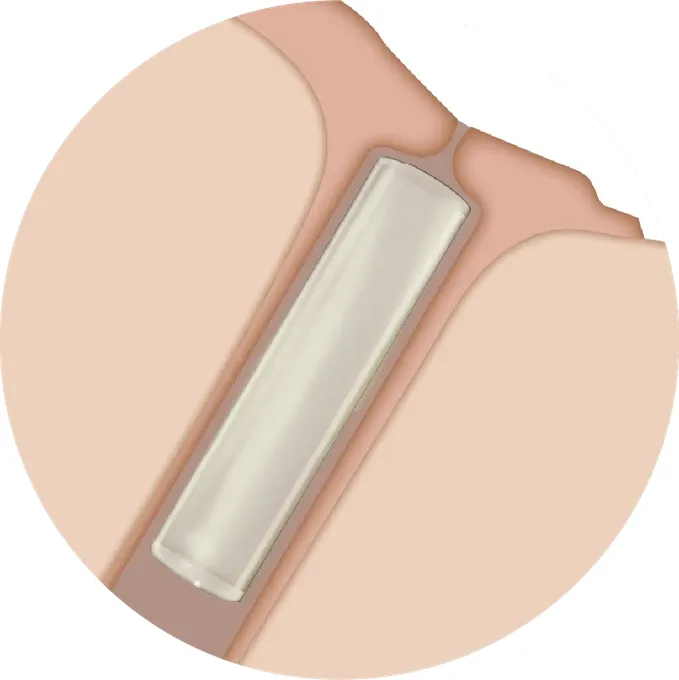
Dissolvable plug
Oasis Medical · USA
Dissolvable plugs made of collagen or synthetic materials break down within days to months, depending on the product. They are suitable for testing the effect of occlusion first.
Image: OASIS Medical, Inc. · oasismedical.com
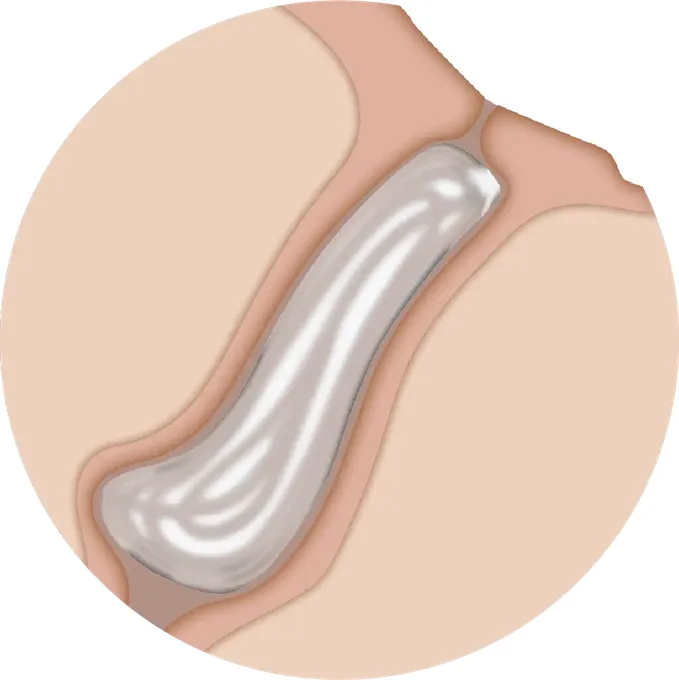
Intracanalicular plug
Oasis Medical · USA
Intracanalicular plugs lie deeper in the canaliculus and are not visible from outside. They are, however, harder to check and to remove.
Image: OASIS Medical, Inc. · oasismedical.com
Device photographs are the property of their respective manufacturers and are reproduced here to identify the equipment described. Smart Dry Eyes has no commercial relationship with these manufacturers.
What insertion involves
Before
Before treatment, the tear volume, tear film, ocular surface and lid margins are examined. The findings show whether there is a tear deficiency and whether closing the tear drainage makes sense. The size of the punctum is then assessed so that a suitable plug can be chosen. Often a dissolvable plug is placed first to test the effect.
During
If needed, the ocular surface is numbed with drops. The doctor then places the plug in the punctum with a fine applicator. This takes only a few moments per eye; usually no more than a brief feeling of pressure is felt. Often only the lower punctum is closed at first, in both eyes during the same session if both are affected.
After
Usual activities can generally be resumed straight away. In the first days there may be a slight foreign-body sensation at the inner corner of the eye. Try not to rub there, so that the plug does not come loose. Contact the treatment centre if you have persistent watering, pain, increasing redness, swelling or discharge.
Follow-up
At the follow-up visit it is checked whether the plug is seated correctly and whether symptoms and objective findings have improved. A plug can be lost unnoticed and can be replaced if needed, if necessary in a different size. If closing the lower punctum is not enough, the upper one can be closed as well. Permanent surgical closure is considered only in selected cases.

Who punctal plugs are suitable for
Possible indications
- Punctal plugs can be considered for dry eye with a confirmed aqueous tear deficiency, for example in Sjögren’s syndrome or another cause of reduced tear production.
- A prerequisite is that symptoms or ocular surface findings persist despite appropriate basic therapy.
- Occlusion can also be considered for contact lens wearers with a confirmed tear deficiency.
Contraindications and limits
- Punctal plugs should not be used in the presence of an active infection of the eye or the tear ducts, an obstruction of the tear drainage, a malposition of the lower lid such as ectropion, or a known allergy to the plug material.
- Inflamed lid margins and active inflammation of the ocular surface are generally treated first.
- In predominantly evaporative dry eye with a normal tear volume, punctal plugs are not the primary treatment.
- If meibomian gland dysfunction is the main problem, the lid margins and glands are treated first.
- The examination shows whether a combination of several procedures makes sense.
Costs
Germany
Punctal occlusion with punctal plugs
from €415
Follow-up or return visit
from €150
The actual costs depend on the treatment centre, the plug type, the number of puncta treated and any combination therapies. In Germany, this is generally a private medical service. Whether a private health insurer or the Beihilfe scheme covers the costs depends on the individual policy and case. You will receive written cost information before treatment.
Frequently asked questions
Is insertion painful?
Usually only a brief feeling of pressure is felt at the inner corner of the eye. If needed, the ocular surface is numbed with a drop beforehand. No injection is required.
Can you feel the plug in everyday life?
In the first days there may be a slight foreign-body sensation, which usually subsides. Most patients no longer notice the plug after that. If it remains bothersome, it can be removed or exchanged for a different size or type.
Can the plug be removed again?
Silicone plugs in the punctum can usually be removed in a few moments with fine forceps. Dissolvable plugs break down by themselves. Intracanalicular plugs are harder to reach; removing them requires irrigation of the tear ducts and, in rare cases, a minor procedure.
What happens if a plug falls out?
This is the most common problem with silicone plugs and is usually harmless. It often goes unnoticed at first. If the symptoms return, the plug can be replaced at a follow-up visit, if necessary in a different size.
My eyes water often. Is occlusion still an option?
Watery eyes can be a sign of dry eye: the irritated ocular surface triggers reflex tearing. Tearing of this kind does not in itself rule out punctal plugs. If, however, the eye waters because the tear ducts are blocked or the lower lid does not sit properly against the eye, occlusion is not appropriate. The examination clarifies which cause is present.
Can the eye water after insertion?
Yes. In some patients, more tear fluid remains on the eye after occlusion than can drain away. That is why usually only the lower punctum is closed at first, and often a dissolvable plug is used as a trial. If the eye waters persistently, the plug is removed.
When can improvement be expected?
A change can become noticeable within days to a few weeks. How marked it is varies from person to person. A particular treatment outcome cannot be guaranteed for the individual patient.
How well studied is the treatment?
Punctal occlusion has been used for decades and is listed in the international recommendations on dry eye as a measure for keeping tear fluid on the eye. Observational studies show an improvement in symptoms and findings in suitable patients. High-quality randomised trials are limited, however, and their results are inconsistent. Careful patient selection and a trial with a dissolvable plug are all the more important.
Which treatment is right for your eyes
Dry eye can have different causes. Biofilm, inflamed lid margins, thickened meibum, ocular rosacea and aqueous tear deficiency each call for a different therapeutic approach. Smart Dry Eyes records the relevant findings systematically. On that basis, the ophthalmologist decides which treatment or combination is right for you.
Other treatments for dry eyes
Medically reviewed by Dr. Ludger Hanneken, MD, PhD · Medical Director, Smart Dry Eyes