
Treatment
Eyelid Cleansing and Blepharoexfoliation
Professional cleansing for blepharitis and stubborn deposits
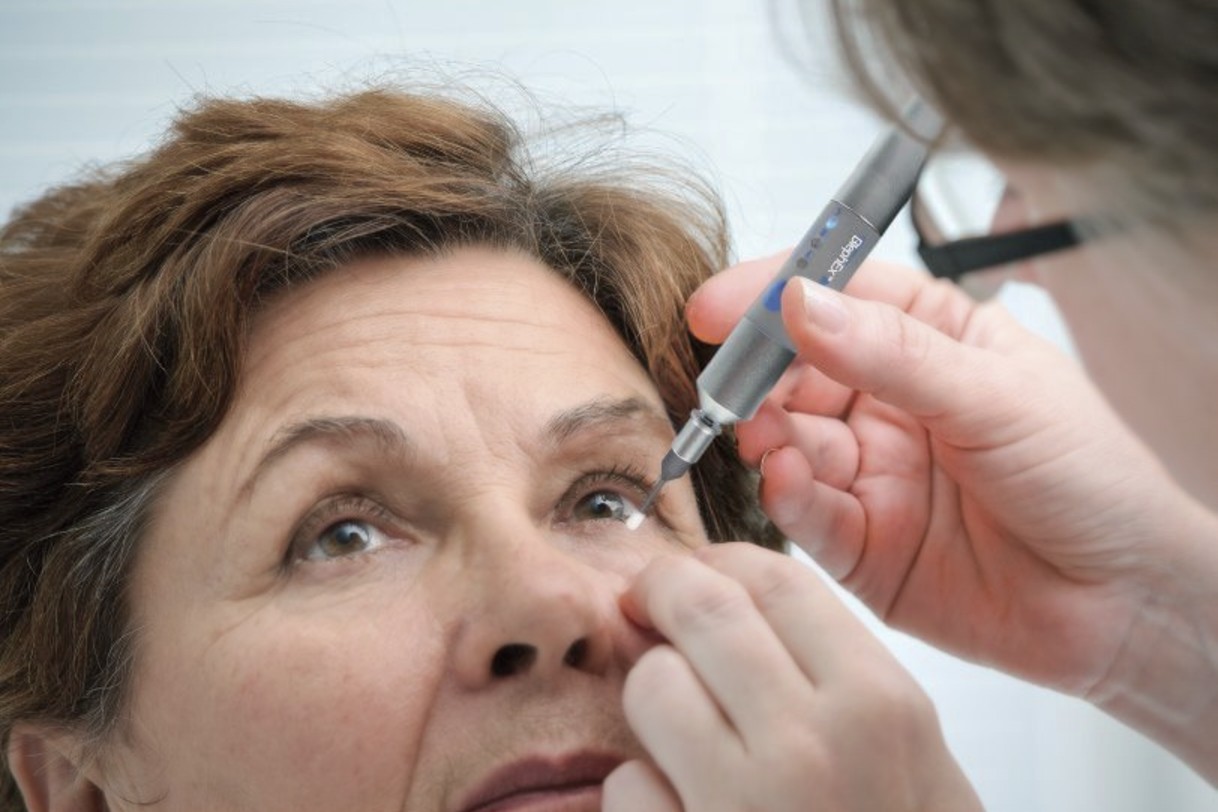
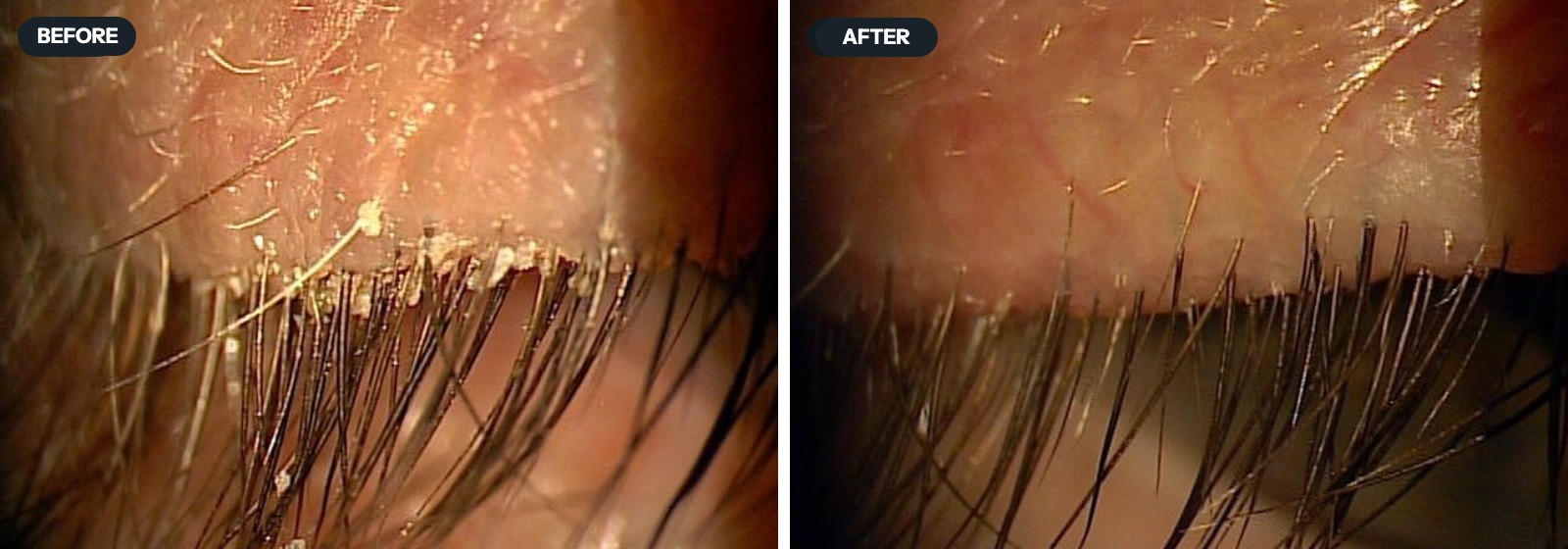
In blepharoexfoliation, biofilm, crusts and firmly adherent deposits are removed in a targeted way from the lid margin and the base of the lashes. The treatment takes only a few minutes and can improve the conditions for effective lid hygiene at home and for further therapies of the meibomian glands.
Photo: BlephEx LLC (edited)
- Treatment time
- About 5 to 10 minutes
- Repetition
- Depending on the findings, often every 4 to 6 months
- Sensation
- Slight tingling or vibration
- Downtime
- Usually none
What does professional eyelid cleansing treat?
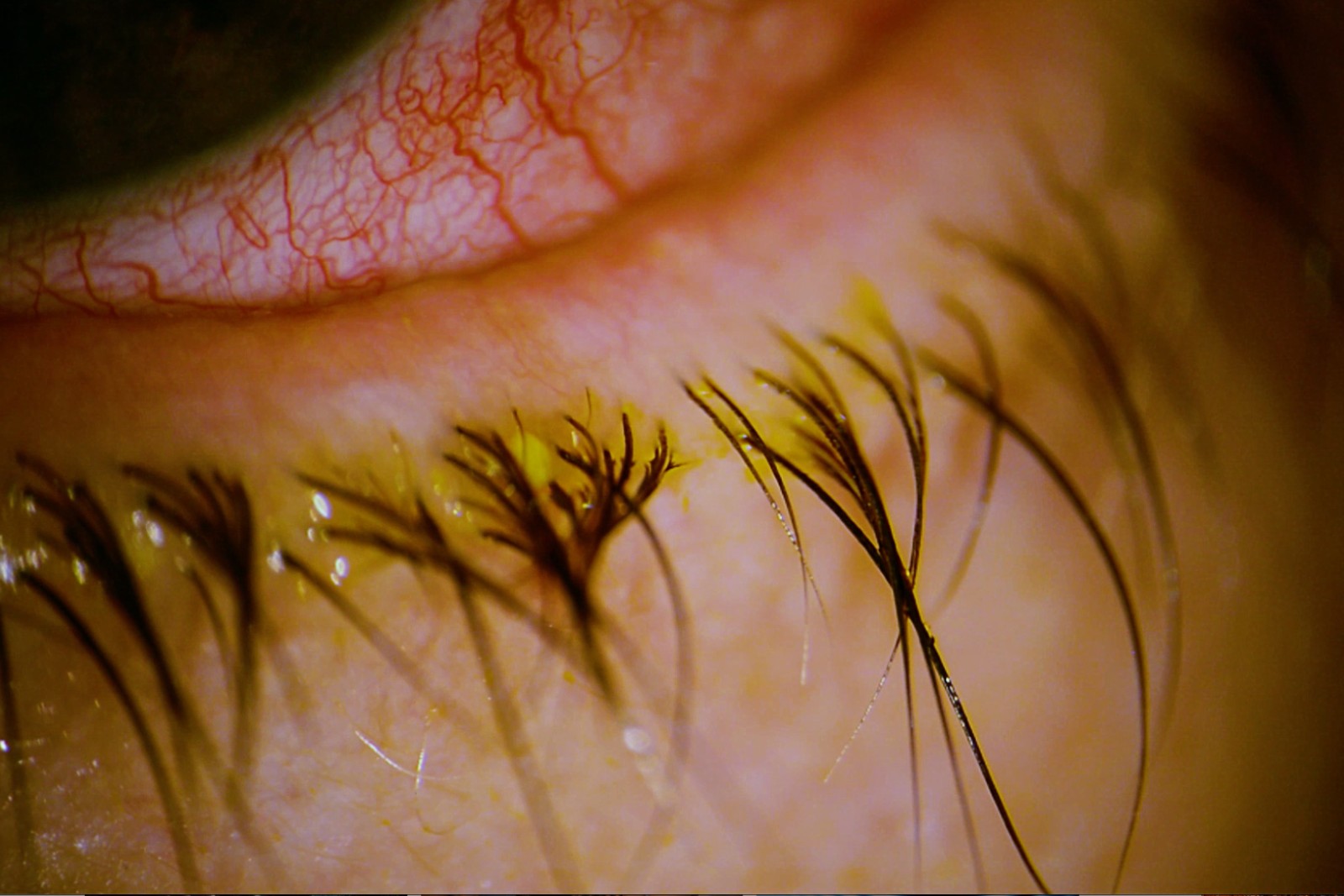
Professional eyelid cleansing is used above all for blepharitis, an inflammation of the lid margin that frequently runs a chronic course. Typical findings are flakes, crusts and sticky deposits at the base of the lashes. Cylindrical sleeves around individual lashes — collarettes — point to an infestation with Demodex mites.
In addition, cleansing can prepare for a treatment of the meibomian glands. If the gland openings at the lid margin are covered by biofilm or keratinised deposits, the secretion can leave only with difficulty, even after warming.
Blepharoexfoliation removes superficial deposits. It does not directly treat a deeper obstruction of the meibomian glands, and it cannot restore gland tissue that has already been lost.
Why biofilm cannot simply be wiped away
- 01Bacteria form an adherent biofilm
- 02Lipases alter the composition of the meibum
- 03Free fatty acids can irritate the ocular surface
- 04The secretion becomes more viscous
- 05Crusts and keratinisation impair the excretory ducts
The lid margin is not merely dirty. Bacteria can form an adherent, structured layer there, known as a biofilm. In its behaviour it resembles dental plaque more than loose dirt, and it often cannot be removed completely with water or a single lid wipe.
A growing biofilm can promote inflammation at the lid margin. Enzymes produced by bacteria, lipases in particular, alter the composition of the meibum. This can give rise to free fatty acids, which further irritate the ocular surface and make the secretion more viscous.
Crusts, keratinisation and Demodex-associated deposits can also mechanically impair the excretory ducts of the meibomian glands. Professional cleansing therefore addresses a possible contributing cause of lid margin inflammation and gland obstruction.
What an eyelid cleansing involves
Before
Before the treatment, the lid margins are examined at the slit lamp. The practitioner assesses the type and extent of the deposits as well as possible signs of blepharitis or Demodex. If needed, the ocular surface is prepared with a topical anaesthetic drop.
During
During the treatment, a special micro-sponge or a comparable instrument is guided in a controlled way along the upper and lower lid margins. A suitable cleansing solution helps to detach biofilm, crusts and flakes. The treatment is usually perceived as a slight tingling and takes about five to ten minutes.
After
The lid margins are then checked again. Slight, temporary redness or a brief burning sensation is possible. Usual activities can generally be resumed immediately.
Follow-up
Professional cleansing is complemented by regular, individually adapted lid hygiene at home. Whether and when a further treatment is appropriate depends on the clinical findings and how they develop.
Who the treatment is suitable for
Possible indications
- Blepharitis with crusts or flakes
- Cylindrical sleeves (collarettes) as a sign of Demodex
- Recurring deposits despite lid hygiene at home
- Preparation for a heat treatment or meibomian gland expression
Contraindications and limits
- In the case of acute infectious conjunctivitis or keratitis, a corneal epithelial defect, or shortly after eye surgery, the treatment should be postponed.
- Particular caution is also required if the patient is unable to keep still during the procedure.
- Eyelid cleansing does not replace treatment of deeper gland obstruction.
- Which combination is appropriate is decided after the examination.
Costs
Europe
Professional eyelid cleansing
from €100
Follow-up visit
from €150
The actual costs depend on the centre, the extent of treatment and any combination therapies. In Germany, this is generally a private medical service. Reimbursement by private health insurers or the Beihilfe scheme depends on the tariff and the individual case. Patients receive transparent cost information before treatment begins.
Frequently asked questions
Can’t I simply clean my eyelids at home?
Daily lid hygiene is important, but it does not always fully reach firmly adherent biofilm and pronounced crusts. Professional cleansing is carried out under magnification and with a controlled mechanical action. Afterwards, care at home helps to stabilise the result achieved.
Is the treatment painful?
Usually only a slight tingling or vibration is felt. Where the lid margins are already severely inflamed, a slight burning sensation can occur temporarily.
How often should the treatment be repeated?
A fixed interval does not make sense for all patients. A check-up often takes place after several months; what matters is the condition of the lid margins, care at home and the speed at which deposits form again.
Which treatment do your eyes need?
Not all dry eye is the same. Biofilm, inflamed lid margins, thickened meibum, ocular rosacea and reduced tear production call for different therapeutic approaches. Smart Dry Eyes records the relevant findings systematically. The medical assessment decides which treatment or combination is appropriate for you.
Other dry eye treatments
Medically reviewed by Dr. Ludger Hanneken, MD, PhD · Medical Director, Smart Dry Eyes