
Treatment
Lacrifill® Treatment for Dry Eyes
Cross-linked hyaluronic acid gel for temporary closure of the tear drainage
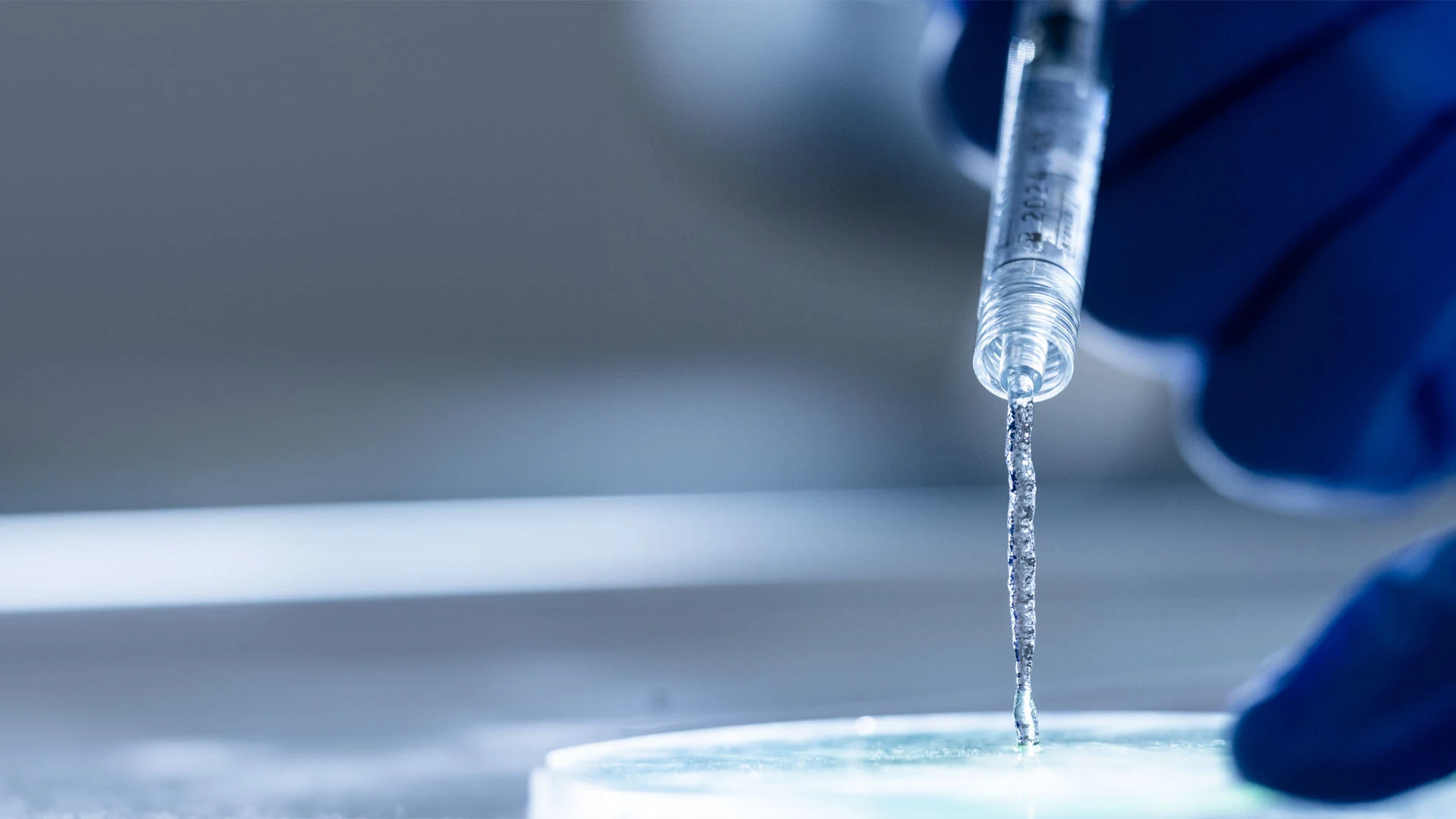
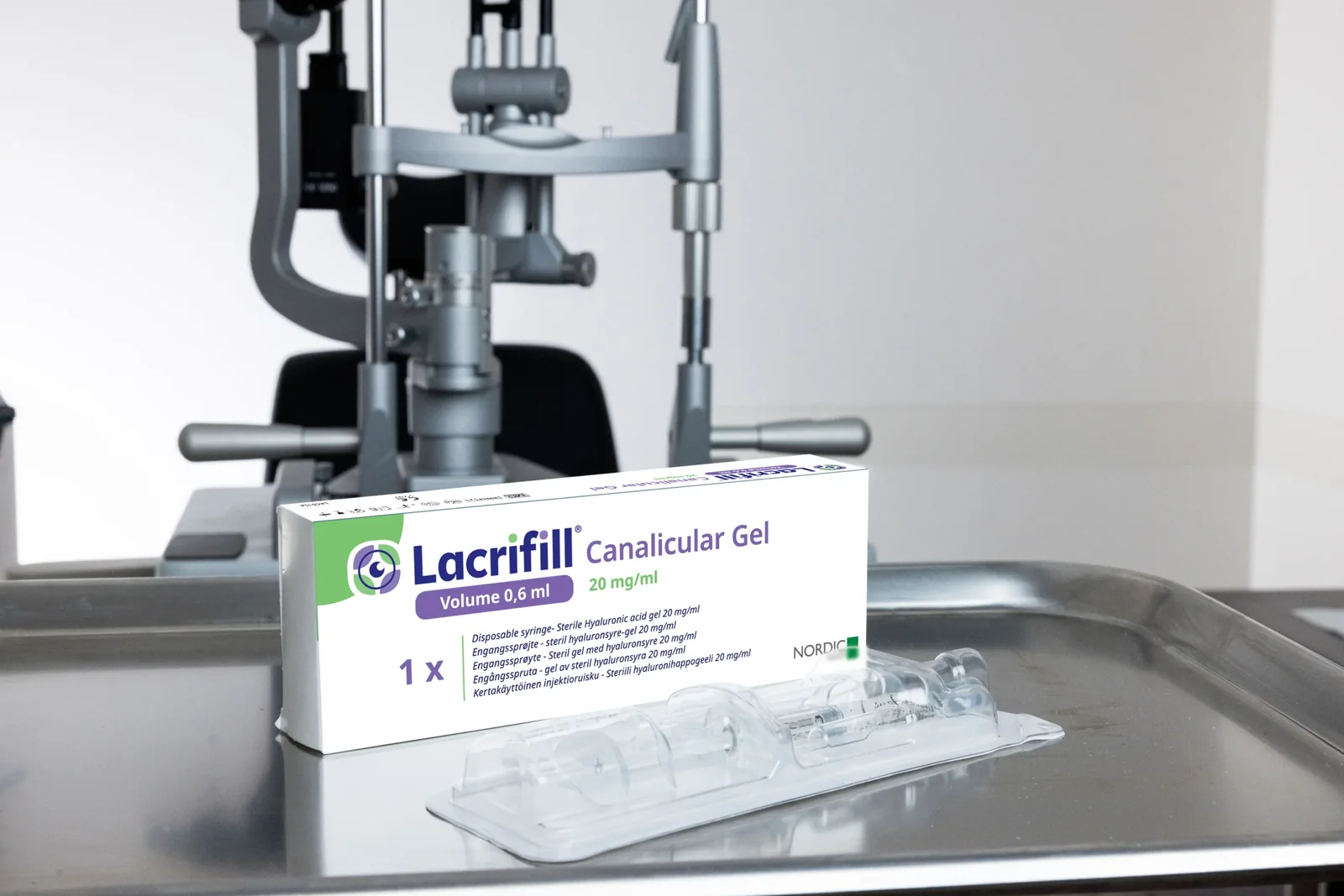
Lacrifill® is a sterile, clear gel of cross-linked hyaluronic acid. It is placed in the lower canaliculus, the tear drainage canal of the eyelid, and temporarily reduces tear outflow. As a result, the eye’s own tears stay on the ocular surface for longer. The gel adapts to the canaliculus, is not visible from outside and can be rinsed out with sterile saline in the event of discomfort or complications.
- Treatment time
- A few minutes for both eyes
- Duration in place
- Up to 6 months
- Sensation
- Slight pressure; anaesthetic drops
- Downtime
- Usually none
When Lacrifill is used
Lacrifill® can be used in adults with symptoms of dry eye when reducing the tear outflow appears medically appropriate. This applies most obviously in aqueous tear deficiency. Signs of this include a low Schirmer value, a low tear meniscus and staining of the ocular surface.
The principle is the same as with punctal plugs: if less tear fluid drains away through the tear ducts, the tears that are present stay on the ocular surface for longer. Lacrifill® does not use a preformed plug for this, but a gel that fills the canaliculus from the inside.
Lacrifill® does not increase tear production and treats neither inflammation nor meibomian gland dysfunction. If the lipid layer is deficient or the lid margins are inflamed, these causes are therefore treated, or brought under control, first.
How Lacrifill works
- 01Tears drain through the puncta into the canaliculi
- 02The gel fills the lower canaliculus
- 03Tear outflow is temporarily reduced
- 04The eye’s own tears stay on the ocular surface for longer
- 05After six months at the latest, the gel is rinsed out
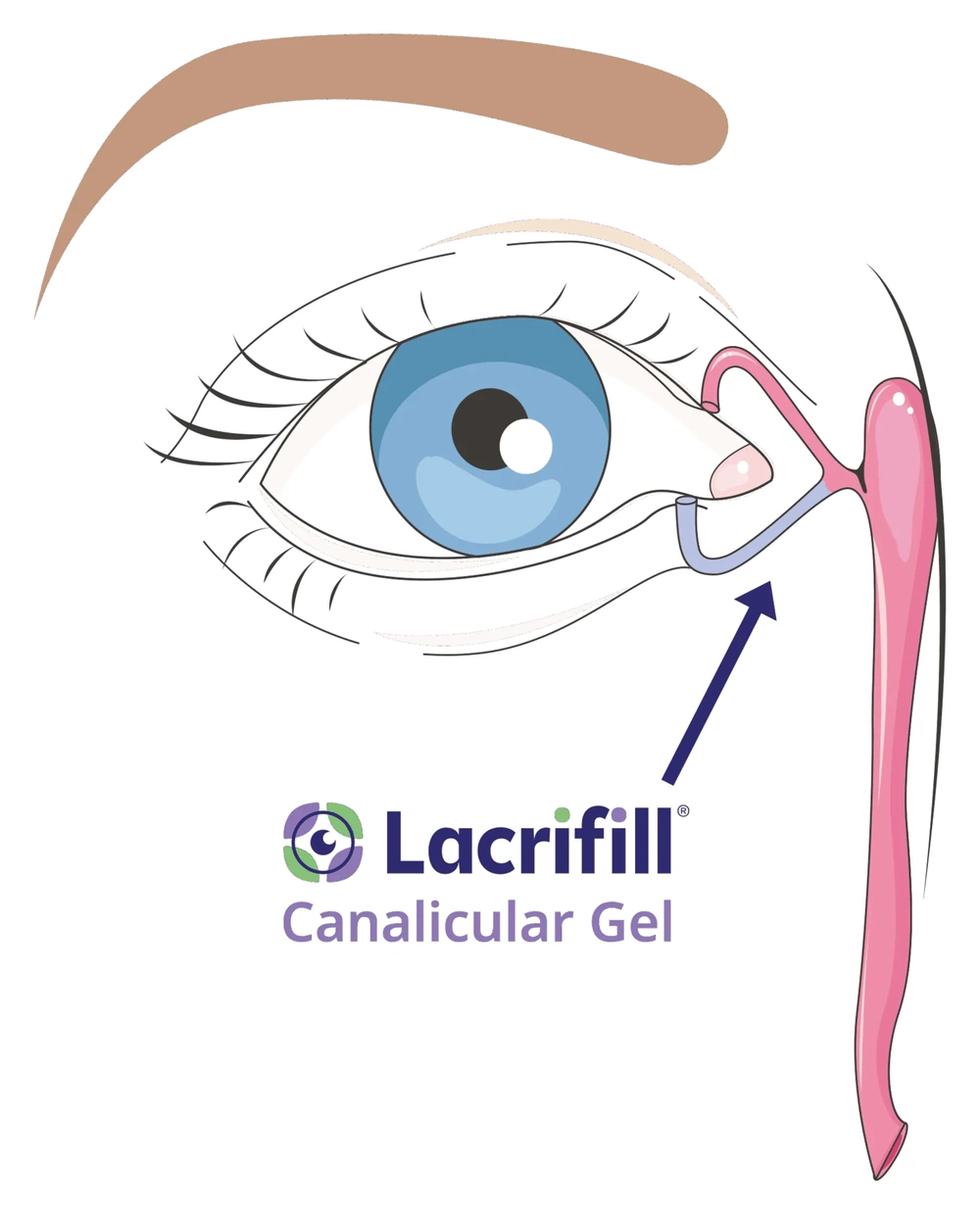
Tear fluid is produced continuously, spread over the ocular surface with every blink and drained at the inner corner of the eye. There, at the edge of the upper and lower lid, lies a fine opening, the punctum. It leads into a duct about ten millimetres long, the canaliculus. The upper and lower canaliculi open into the lacrimal sac, from where the tears pass into the nose.
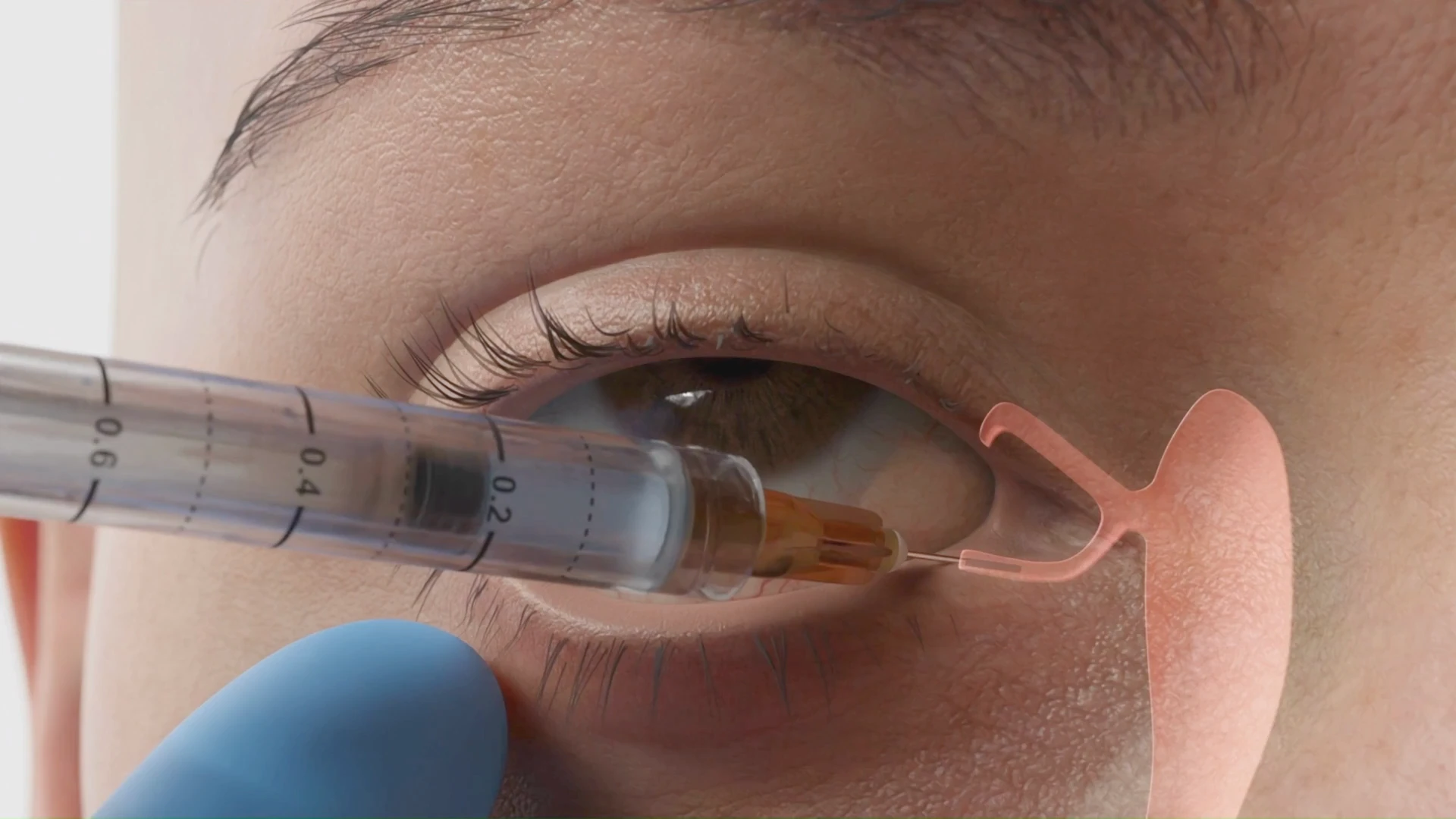
Lacrifill® consists of non-animal hyaluronic acid whose molecular chains are cross-linked. This produces a gel that holds its shape. It is introduced through the lower punctum with a fine lacrimal cannula and fills the canaliculus. Unlike a preformed plug, no fixed size has to be chosen.
Because less drains away, both the eye’s own tear fluid and any eye drops applied can remain on the ocular surface for longer. Tear production itself does not change. As the effect of medicated eye drops may be increased, their dosage may need to be adjusted.
The occlusion is temporary. Lacrifill® is intended for use for up to six months; safety and effectiveness beyond that period have not been established. In the event of irritation, infection, persistent watering or another adverse event, the gel is rinsed out of the canaliculus with sterile saline.
Important note. Lacrifill® is a CE-marked medical device. The legal manufacturer is Nordic Group B.V. in the Netherlands. Smart Dry Eyes has no commercial relationship with the manufacturer or distributor. Tear drainage can also be reduced with silicone plugs or dissolvable plugs. Which procedure is suitable is decided by the ophthalmologist after the examination.
What a Lacrifill® treatment involves
Before
Before treatment, the tear volume, tear film, ocular surface and lid margins are examined. Irrigation is also used to check that the tear ducts are fully patent. Adequate drainage is a prerequisite for the treatment. An active infection is treated first; inflamed lid margins should be sufficiently under control before occlusion.
During
The ocular surface is numbed with drops. If necessary, the punctum is gently dilated. The doctor then introduces the gel into the lower canaliculus with a fine lacrimal cannula. If both eyes are affected, both can be treated in the same session. Usually only slight pressure is felt; the treatment takes a few minutes.
After
Usual activities can generally be resumed straight away. After placement, a little gel may emerge at the upper punctum. If it affects vision, it is rinsed off the ocular surface. Contact the treatment centre if you have persistent watering, pain, increasing redness, swelling or discharge.
Follow-up
At the follow-up visit it is assessed whether symptoms and objective findings have improved. Early removal is possible and is required in the event of irritation, infection or persistent watering. Whether a repeat treatment makes sense later depends on the findings, the effect and how well it was tolerated.
Who Lacrifill is suitable for
Possible indications
- Lacrifill® can be considered for adults with persistent symptoms of dry eye when these can be relieved by reducing the tear outflow.
- Particularly relevant are a confirmed aqueous tear deficiency and findings of an insufficiently wetted ocular surface.
- The procedure provides a temporary occlusion that is not visible from outside and can be considered when preformed plugs are not suitable or were not tolerated.
Contraindications and limits
- Lacrifill® must not be used in the presence of an obstruction of the tear drainage, an active infection of the eye or its surroundings, inflammation of the ocular surface not caused by dry eye, or a known allergy to hyaluronic acid.
- In ectropion, clinical performance has not been established.
- Inflamed lid margins and meibomian gland dysfunction are generally treated, or brought under control, first.
- Lacrifill® is intended for adults. Clinical performance has not been established, and use may not be advisable, during pregnancy and breastfeeding, in children and adolescents, within six months of eye surgery, and with several other pre-existing conditions and concomitant medications. These points are checked by the doctor before treatment.
- In predominantly evaporative dry eye with a normal tear volume, Lacrifill® is not the primary treatment.
Costs
Europe
Lacrifill® treatment, both eyes
on request
Follow-up or return visit
from €150
The actual costs depend on the treatment centre, the extent of treatment and any combination therapies. Lacrifill® has been available in several European markets since 2026 and is not offered at every centre. In Germany, this is generally a private medical service. Whether a private health insurer or the Beihilfe scheme covers the costs depends on the individual policy and case. You will receive written cost information before treatment.
Frequently asked questions
Is the treatment painful?
The ocular surface is numbed with drops beforehand. When the gel is introduced, usually only slight pressure is felt at the inner corner of the eye. Temporary irritation or a foreign-body sensation is possible afterwards.
Can you feel or see the gel?
Usually not. The gel lies inside the canaliculus and is not visible from outside. Unlike a plug with a collar, nothing rests on the lid margin.
How long does the effect last?
Lacrifill® is intended for use for up to six months. Safety and effectiveness beyond that period have not been established. How long the effect lasts in an individual case, and whether a repeat treatment makes sense later, depends on the findings and the course.
Can the gel be removed again?
Yes. In the event of irritation, infection, persistent watering or another adverse event, the gel is rinsed out of the canaliculus with sterile saline. Whether further measures are needed is decided by the treating ophthalmologist.
What side effects are possible?
Possible effects include a watery eye (epiphora), foreign-body sensation, itching, local irritation, swelling or pain at the lid. Less commonly, inflammation or infection of the tear ducts, allergic reactions, a granuloma or damage to the cornea can occur. In the event of irritation, infection or epiphora, the gel should be removed. Medicated eye drops may remain on the eye for longer; their dosage may therefore need to be adjusted.
How does Lacrifill® differ from punctal plugs?
Both procedures reduce tear drainage. Punctal plugs are preformed and are chosen in a suitable size. Silicone plugs sit visibly in the punctum, can be felt as bothersome or fall out, and can usually be removed with forceps. Lacrifill® fills the canaliculus as a gel, needs no fixed size selection, is not visible from outside and can be removed by irrigation. It is intended for use for up to six months. Which method is suitable is decided by the medical examination.
How well studied is Lacrifill®?
In a randomised, double-masked study at five US centres, 157 patients were treated. Lacrifill® was compared with an intracanalicular hydrogel plug. After three months the gel was non-inferior to the comparator in terms of tear volume and symptoms; the improvements observed persisted to month six. The study showed no superiority, included no sham treatment and provides no data beyond six months. TFOS DEWS III lists cross-linked hyaluronic acid gel as a tear conservation procedure. A treatment outcome cannot be guaranteed in the individual case.
Which treatment is right for your eyes
Dry eye can have different causes. Biofilm, inflamed lid margins, thickened meibum, ocular rosacea and aqueous tear deficiency each call for a different therapeutic approach. Smart Dry Eyes records the relevant findings systematically. On that basis, the ophthalmologist decides which treatment or combination is right for you.
Other treatments for dry eyes
Medically reviewed by Dr. Ludger Hanneken, MD, PhD · Medical Director, Smart Dry Eyes